
10-11 June 2026
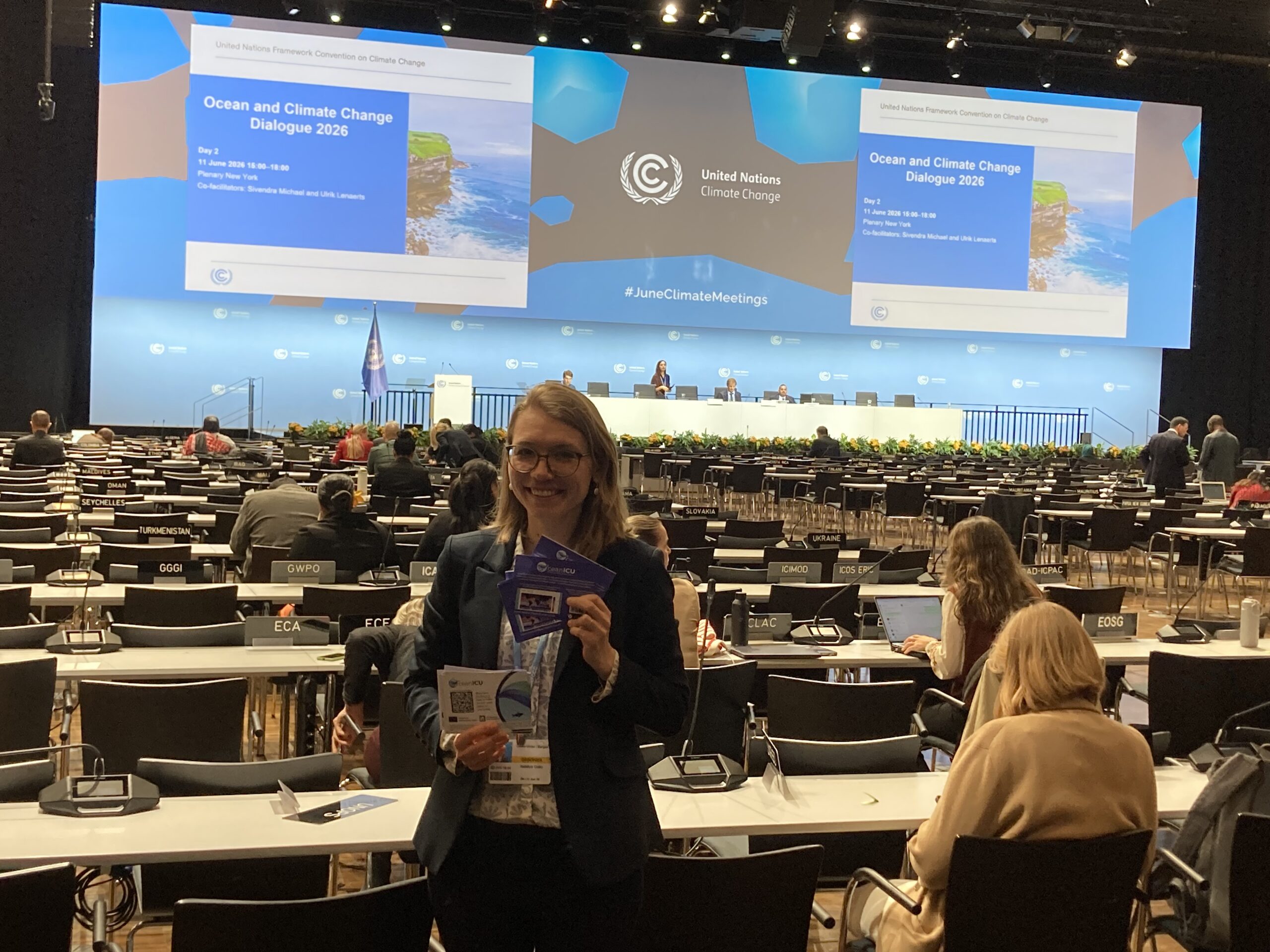
Consortium member Natalya Gallo (NORCE) attended the SBSTA 64 Negotiations in Bonn, Germany where she introduced stakeholders to OceanICU’s Decision Support Tool and solicited feedback of its prototype in support of the project’s Ocean and Climate Policy impact efforts.
The SBSTA is the subsidiary body for scientific and technological advice and supports the annual UNFCCC COP negotiations by providing scientific support and coordination with bodies such as the IPCC. A mandated event for SBSTA is the Ocean and Climate Change Dialogue, which serves as a dedicated space to advance ocean-based climate action under the UNFCCC process. This event took place on 10-11 of June. Reporting from the frontline, Natalya had this to say:
“One of the focal areas of the ‘Dialogue’ is to strengthen ocean-based climate action by encouraging Parties to embed ocean-related actions within their nationally determined contributions (NDCs) under the Paris Agreement. There has been large progress with this. As of March 2026, 76% of the newly submitted NDCs explicitly reference the ocean 1 . Five main themes represented in these ocean-related actions are: i) Coastal Resilience; ii) Blue Carbon Ecosystems including blue carbon sequestration; iii) Fisheries and Aquaculture; iv) Renewable Energy; and v) Decarbonization of Maritime Transport. But, in keeping with the theme of implementation, many Parties point to the need for additional finance and ‘enabling factors’ to realise their NDC ambitions. There was also attention at the ‘Dialogue’ dedicated to ocean-climate-biodiversity synergies, and international cooperation, including synergies with BBNJ and the upcoming COP1. Looking forward, it seems that COP31 in Antalya, Türkiye will be a big COP for ocean action”.
Natalya had the opportunity to provide an intervention at the conclusion of the Ocean and Climate Change Dialogue on behalf of the RINGO (Research and Independent Non-Governmental Organizations) constituency, for research and independent NGO observer groups. She focused on the importance of ocean observing to detect changes in the ocean carbon sink and the value of transdisciplinary research to deliver the information needed to support the UNFCCC agenda.
As OceanICU moves through its fourth year, activity is being tracked against Impact Clusters. Natalya’s outreach and promotion of the DST supports Cluster 3: Ocean and Climate Policy, which aims to strengthen the integration of scientific findings from OceanICU on key biological carbon cycle processes into international ocean climate decision-making.
Check out Version 2 of the DST tool operating on the European Digital Twin of the Ocean (EDITO) here.