

In this edition:
- Welcome Note
- Featured Article: From 28 to Six: How to Organise the OceanICU Story for Impact
- Good Reads
- Notable News
- OceanICU Outreach
- Upcoming Events
OceanICU is a five-year project that seeks to gain a new understanding of the biological carbon pump and its processes to provide fundamental knowledge and tools to help policy makers, regulators and Ocean industry—fishing and mining, along with the wider blue economy—manage and understand the impact of their actions on Ocean carbon. This will ultimately lead to a better approach for addressing climate change in alignment with the EU Green Deal to reduce the net emissions of greenhouse gases to Zero by 2050.
Welcome Note
Hello, and a warm welcome to this issue of the OceanICU newsletter.
We are now two-thirds of the way through the project and well into the delivery phase and currently focussing on our upcoming periodic reporting, which is a strangely satisfying experience because we have the opportunity to look back and take stock of all that has been accomplished. We are also looking forward to a few exciting upcoming events:
- IPCC Webinar: We know the IPCC is really important but what’s it all about and how does it work? We’ll explore in the next OceanICU webinar. Details below.
- Session at the Royal Society in London about biodiversity and the climate crisis. We often hear statements suggesting they are intertwined and we need to address them together. But what does this actually mean in the ocean: how does biodiversity itself help biological C storage? There is still time to register to attend talks by global experts focussed on various aspects of this complex problem. More info below.
- Looking forward to next year, we are participating in a workshop led by the BioCarbon programme in Glasgow, focussed on plotting the way forward for biological C pump research. Stay tuned for more information in our next newsletter.
And one last note, we have gained over 1000 followers on LinkedIn, which means that there is a broad audience interested in OceanICU, the work of our colleagues and the results we are publishing. Thanks to all the followers out there who have engaged with our posts and helped the community grow. We look forward to sharing more stories with you on this platform and Bluesky.
Richard Sanders,
OceanICU Project Coordinator
NORCE


From 28 to Six: How to Organise the OceanICU Story for Impact
The OceanICU investigation is broad with many threads in support of an overall objective to fill fundamental knowledge gaps concerning the biological carbon pump. As the project approaches its third birthday at the end of November, a lot of work has been delivered and results are being published. So how do we synthesise the work to understand what we know now

that we did not know before the project started? And how can we best disseminate this information to achieve the desired impact? Enter the concept of Key Performance Indicators (KPIs) and OceanICU’s team of science and policy experts.
When the OceanICU concept was initially developed, a total of 28 KPIs were identified and during the early phase of the project, these KPIs were the beacons we tracked against. By the midpoint of the project, with more results being delivered and the consortium preparing to gather in person for the Annual Meeting in Poland, an opportunity presented itself. Why not group the catalogue of KPIs into six thematic clusters and create cross-discipline, cross-work package groups to look at how to best develop a targeted impact strategy around each one? The idea was well received by the Scientific Advisory Board and the consortium, and the work began. Since kicking off the exercise, the cluster teams have had follow up meetings and the communication, dissemination and exploitation strategies for each cluster have taken shape.

Understanding carbon in the ocean: is it enough?
In the latest OceanICU blog, Emma Dolmaire (University of Strathclyde) explains why the classic Redfield ratio may not tell the full story when estimating carbon in marine ecosystems. By developing a new algorithm to translate nitrogen-based ecosystem model outputs into carbon, her work shows that relying on a fixed ratio can underestimate carbon sequestration

Sequestration by the Biological Carbon Pump: Do We Really Know What We’re Talking About?
Marine scientists have an alarming habit of attributing carbon sequestration to processes that really only relate to the turnover of long-lived natural carbon pools. This conflicts with the general understanding that carbon sequestration implies a potential offset to anthropogenic emissions. Without a critical re-examination of the terminology used, we run the risk of seriously damaging an informed political debate on climate action from carbon trading to marine CO₂ removal (mCDR) strategies, as well as undermining our credibility.
In this thought-provoking article, author and OceanICU colleague Andre Visser (DTU) proposes a distinction to help clarify how this fundamental BCP metric is reported.
Unexpected decline in the ocean carbon sink under record-high sea surface temperatures in 2023
In 2023, sea surface temperatures (SST) reached record highs. Historically, higher global mean SSTs would mean increased ocean CO₂ uptake, due to reduced outgassing in the tropical Pacific. However, observation-based estimates of ocean CO₂ fugacity reveal that the global non-polar ocean absorbed about 10% less CO₂ than expected. In most regions, this SST-induced outgassing was mitigated by the depletion of dissolved inorganic carbon in the surface mixed layer. But this resilience may not persist under long-term warming or more severe extremes. OceanICU colleagues Marion Gehlen (CNRS) and Judith Hauck (AWI) are among the authors of this important paper.

Webinar: Unpacking the IPCC
6 November at 14:00 (CET)
Register here
How has the IPCC become one of the premier ways to communicate key insights? Considering its process is a mystery to many in our community, we thought it would be worth addressing this question and exploring other common questions in the next OceanICU webinar, co-hosted by our sister project TRICUSO.

The event will centre on a discussion with former and new authors including our colleagues Stephanie Henson (NOC) and Alessandro Tagliabue (University of Limerick), and guests Sandy Thomalla (CSIR), and Peter Landschützer (VLIZ), all of whom are associated with the ocean carbon area of the IPCC. There will also be a Q&A so if you have questions, please come along and if you’d like to send them in advance, email them here: hello@ocean-icu.eu
New Poster Gallery on the OceanICU Website
At our 2025 Annual Meeting in Sopot, Poland, OceanICU’s early career researchers shared their latest work highlighting important research across many aspects of the biological carbon pump and its processes. We’re pleased to showcase their contributions and invite you to explore the full Poster Gallery here.

BBNJ Ratification
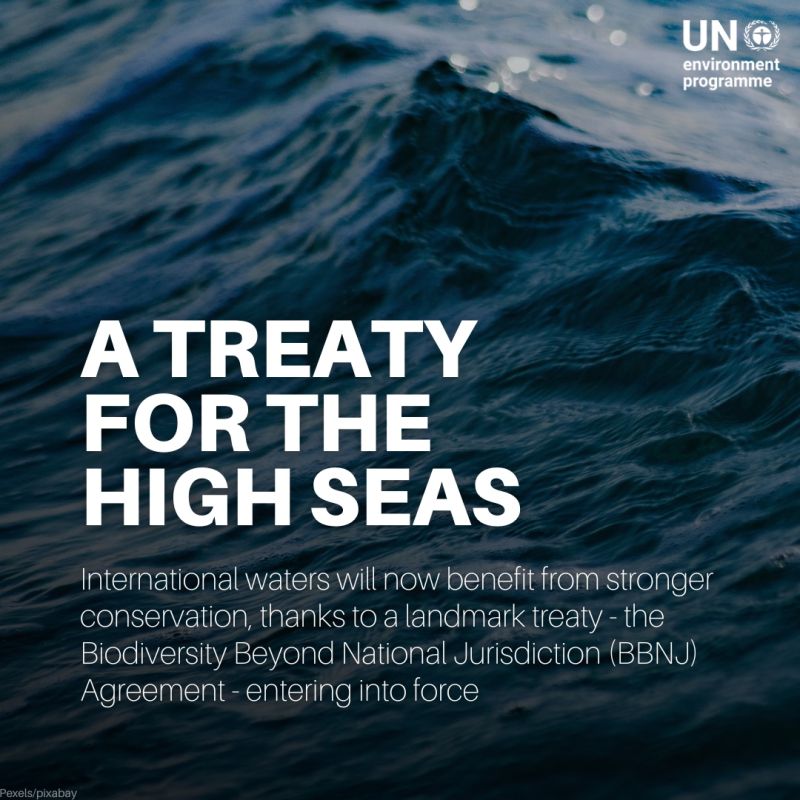
Natalya Gallo (NORCE) weighs in on the news of the BBNJ ratification: “At a time when multilateral diplomacy is under strain, it is very exciting to see the milestone of 60 ratifications for BBNJ reached. OceanICU looks forward to engaging at the first BBNJ COP to raise awareness about the role of the biological carbon pump in biodiversity and climate.”

European Marine Science Educators Association Conference
Ostend, Belgium: 17 – 18: 23 September 2025
Pieter Torrez, Maria Angel and Nathalie Van Isacker (SSBE) met with educators from across Europe while attending the EMSEA conference focused on the importance of Ocean Literacy. Visitors stopping by our poster were very excited to learn about the OceanICU Decision Support Tool and how it will be applied in a range of settings, including teaching younger generations about vital ocean processes.


Webinar: IPCC – What is it all about?
Online 6 November 2025 | 14:00 (CET)
The IPCC process is a mystery to many in our community. We will be unpacking it in a discussion with former and new authors in this cross project webinar with Stephanie Henson, Alessandro Tagliabue and Peter Landschützer. Register here
EMODnet Open Conference 2025
Brussels, Belgium 25 – 26 November 2025
This edition will showcase EMODnet’s central role in the EU Marine Knowledge Landscape, from supporting EU Policy to driving a more competitive, green, and restorative Blue Economy. Register here
The Royal Society Meeting – OceanICU Session – Marine Biodiversity Loss, Fishing and Climate Change
London, UK 08 – 09 December 2025
The event is free for both virtual and in-person attendance. Register here
OceanICU will be organising a discussion meeting at The Royal Society in London. The link between biodiversity loss and climate change has often been overlooked when it comes to the ocean, this session will address this gap to recognise the role of ocean life in climate change mitigation and food security.
Digital Ocean Forum 2025
Brussels, Belgium 27 – 28 November 2025
The Digital Ocean Forum 2025 is an event to share the advances of the European Digital Twin Ocean platform and further co-design it. Register here
Ocean Sciences Meeting
Glasgow, UK 22 – 27 February 2026
The Ocean Sciences Meeting (OSM) is the flagship conference for the ocean sciences and the larger ocean-connected community. Register here
International Workshop: The Role of Marine Biology in Helping the Ocean Store Carbon
Glasgow, UK 2 – 4 March 2026

They are architects building houses while floating through oceans. They are engineers capturing atmospheric carbon, atom by atom. They are… microscopic?
While you breathe, they work. While you sleep, they build. While you read this, they’re protecting our climate system.
Who are they?
Illustrations by Rosie Sheward
#InvisibleHeroes #OceanGuardians #ClimateWarriors
Stay updated with the latest news and information about events
Follow us on social media
And remember, if you’d like to join our mission to improve carbon understanding for a healthy and resilient Ocean and sustainable blue economy, please fill out the Stakeholder Sign-Up Sheet.